Archive for professional services marketing

Analytics and Conversations – Marketing & Sales Need Both

people-pie-chartIn professional services firms, many of us wear the sales, marketing, and delivery hats. Each role has different opportunities to engage in conversations and gather feedback to help improve their performance. While each role has their favorite tools for gathering feedback, it helps to periodically step back to see what other tools are available and to consider new ways of using our existing tools.

Marketing

Marketing tends to be a heavy user of analytics for obtaining feedback. This trend will continue as advancements in technology make it easier for marketers to collect and report on analytical data.

Today’s buyers also expect to be able to have access to increasing amount of information to help them with their decision making process before they talk to a salesperson; this too, will drive marketing’s need for analytical data so they can evaluate the effectiveness of their campaigns.

Creating relevant content that will attract qualified leads is a major part of a marketers job. Marketing can use analytics to help answer the following questions about the content they are producing:

  • Which pages do website visitors read the most?
  • What content (eBooks, videos, podcasts, webinars, etc.) do they consume most frequently?
  • What content results in the greatest number of qualified leads?
  • What are people searching to find us?
  • What is the typical path to engagement? What does someone do before they decide to call, sign up, or request additional information ?

Marketing can also gain feedback by periodically surveying customers and former customers. As I have mentioned in the past, I believe the value from these surveys comes from the conversation, which is why I think at least a portion of your surveying should be done in person (face-to-face or via phone) rather than relying exclusively on an automated survey tool.

Marketing can also benefit from having frequent conversations with sales, as the sales role typically has the best view of the customers needs.

Sales

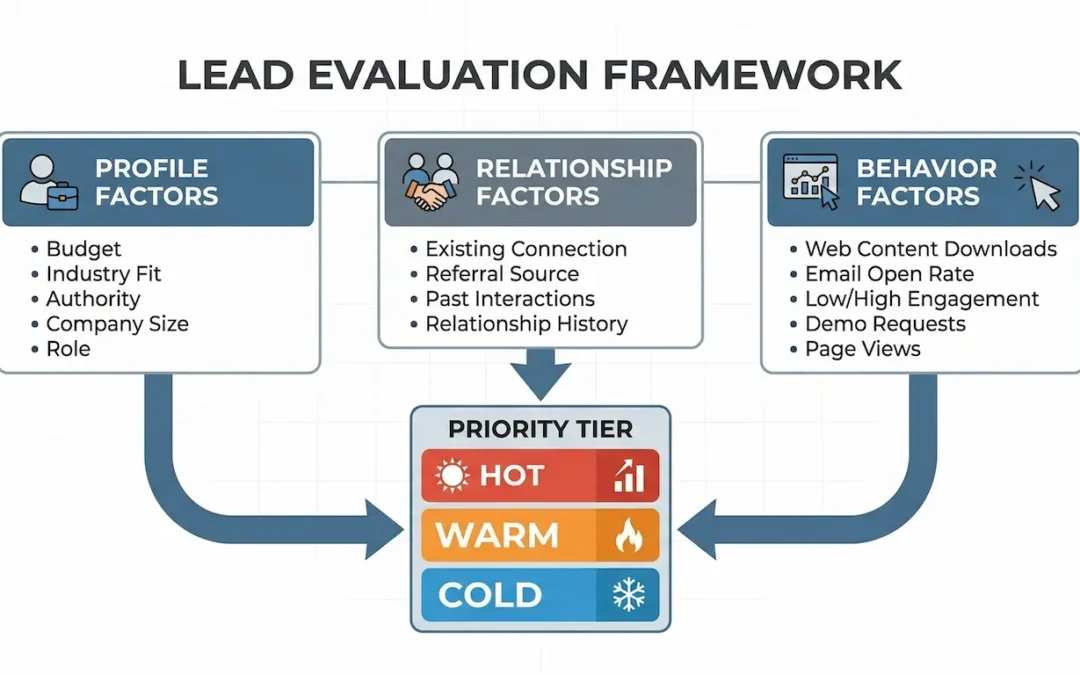
While marketing tends to rely on analytics, sales relies primarily on conversations. Sales can certainly use analytics to help start and\or frame conversations; in fact, one of the best ways that marketing can support sales is by using their analytical data to help determine where prospects are in their buying process.

While sophisticated tools endeavor to only deliver leads to sales when they are ready to buy, basic information about a prospect’s web activity (how they found us, what they’ve downloaded, did they see our video?, etc.) can help sales have more productive conversations.

These sales conversations can provide valuable feedback to the marketing role about whether the content that marketing is producing is aligned with the needs of the customer by answering questions like:

  • What business challenges are prospects facing?
  • How were they hoping we could solve those challenges?
  • What are the risks, from the prospects point of view, of making a change?
  • Who are the other decision makers (what roles)? What information do they need to feel comfortable moving forward?
  • For the leads who did not buy, what was missing? Who disqualified who?

Delivery/Customer Service

We can spend as much money on marketing and sales as we like, but if we don’t deliver on the expectations we created, we will not be successful – at least not in the long run.

While the customer service function has traditionally relied more on conversations for feedback and insight, I believe there is a real opportunity to use analytics to deliver an exceptional customer experience. In order to do this, I think we need to look past the traditional customer service metrics (like number of calls, time to resolve, etc.) and start thinking about how we can detect customer service issues before they become big enough for someone to complain about (or decide to fire us).

  • Do you know when your customers are on your website investigating products and services they have not purchased from you yet?
  • If part of your solution includes software, do you know how often customers have to reference the help system to complete a task?
  • Can you detect changes in usage patterns, such as when your customers suddenly use your product or service more frequently? What if they suddenly stop using it?

These are just a few way you can use analytics to have more meaningful conversations with your customers and prospects. Drop me a note and let me know how you use analytics to have better conversations.

3 Tips That Got Me To 800 Posts

This is my 800th post on this blog (I blogged for a little about software development). My first post on this blog back in July of 2006 was a summary of a book that is still one of my favorites, The Game of Work. I’m sure at the time if you had told me I would blather on for 799 more posts I would have doubted it.

I certainly wouldn’t describe myself as a writer. Just like anyone else who blogs, I often struggle to come up with something to write about, so today I thought I would share 3 tips that I have picked up over the years that have helped me.

Set a schedule – I try to write something daily, at the same time every day. That doesn’t mean I post something everyday. Sometimes I am able to write 2 or 3 posts at once. At other times my best typing of the day is when I hit the delete key.

Talk to one person – I’m not sure where I first learned this idea, I think it may have been from the book Accidental Genius, but it has been a tremendous help to me. Rather than thinking you are writing an article, picture yourself having a conversation with one other person (a friend, customer, prospect, etc.) and write that conversation down. Have you ever left a meeting and on the drive home thought of all of the things you should have said? Have that conversation on your blog. I think you will find it helps your writing and it also helps you do a better job the next time you have a similar conversation.

Learn by teaching – I believe I learned this lesson from Stephen Covey, author of the 7 Habits of Highly Effective People – the best way to learn something is to teach it. I like to use this tip along with the idea of talking to one person. If I was going to teach my best client about a new marketing opportunity, how would I do that? What questions would they ask? Why should they care?

If you are new to blogging, or still considering it, I want you to know that if I can do it, so can you. I believe that if you stick with it, you will benefit greatly. I would do it all over again just because of the people I’ve met through my blog who I don’t think I would have met otherwise.

For those of you who have been blogging for a while, what’s you best tip for keeping it going?

2 New Marketing Programs That Save You Time

One of my goals for Rebar is to keep our marketing services relevant and responsive to needs of professional service firms like yours. I make a habit of soliciting feedback from customers, prospects, and strategic partners to make sure we are addressing their real needs. Over the past six months I have heard two themes being reported with enough regularity that I thought we should change our offerings to address them:

  1. I’m crazy busy; I can’t spend months creating a marketing plan.
  2. I need more time in front of sales ready opportunities; I’m afraid doing all of these marketing activities will leave me with less time to sell.

These are big challenges keeping many owners from taking their business to the next level. That’s why I am excited to announce two new programs that address these challenges.

The Marketing Jump Start Program shortens the typical four to six month process of creating a strategic marketing plan down to 45 days. The bulk of your time commitment is limited to a two day intensive workshop.

Our Managed Marketing Program provides an entire marketing department (people, processes, technology, etc.) in a box. You provide input related to strategy and direction. We execute the strategy and provide feedback, reports, and intelligence about what is working, what isn’t, and what to do next.

I will be updating our website with more information about these programs soon. In the meantime, if you would like more information, just drop me a line and I’ll be happy to send you an information kit.

The Referral Engine -Teach Your Business To Market Itself

Win An Autographed copy here.

Most professional service firms get new business by referral, but do you get quality referrals on a consistent basis? Many firms could rely on referrals as their sole marketing tactic if they had a system in place to generate referrals on a consistent basis.

That’s what John Jantsch’s book The Referral Engine: Teaching Your Business to Market Itself is all about – creating a system that generates a steady flow of new customers.

John explains the secret to generating referrals lies in understanding the Customer Referral Cycle. Regular readers here will recognize this concept as the Marketing Hourglass – the process of leading prospects and customers along the path of Know, Like, Trust, Try, Buy, Repeat, and Refer.

In addition to teaching you how to create a referral system, the book is also chock full of real life examples of people growing their business through referrals.

Today is not only Referral Monday, it’s also the start of National Small Business Week. As part of the celebration, we are giving away an autographed copy of The Referral Engine to one of our newsletter subscribers. Not a subscriber yet? You can subscribe is 5 seconds here.

Stop Selling Activities and Start Selling Knowledge

I often write about the importance of understanding what your customer’s really buy when creating and implementing your marketing strategy. If you have a service firm and think you sell “hours”, you owe it to yourself to listen to Jay Shepherd’s 6 minute talk on why you need to stop selling activities and start selling knowledge.

No that you listened to Jay, what changes are you going to make?

Social Media Strategies for Professionals and Their Firms

Social Media Strategies for Professionals and Their Firms: The Guide to Establishing Credibility and Accelerating Relationships

This book review is way over due. I actually pre-ordered it, so I’m a little embarrassed that I’m just posting about it now. But I’m going to blame it on Michelle (the author, Michelle Golden) for writing such a damn good book. It seems like every time I pick it up to write a review, I get caught up in re-reading it and run out of time. Anyway, that’s my story and I’m sticking to it.

This is easily the best book about social media that I’ve read. I haven’t read them all, but I’ve read a lot of them. I promise this is a book you will dog ear and refer to over and over again.

Before I talk about what’s in the book, I want to talk about why I think Michelle was able to write such a good book about social media. It’s because she get’s it. Sure, she’s a good writer, obviously brilliant, and did great research. But she also “walks the talk” using social media to build and nurture relationships.

How do I know this? I often refer to Michelle as “my favorite person that I’ve never met”. We’ve never met in person, but I feel like I know her. We connected primarily through social media (we may have exchanged emails early on), having brief conversations over time. I would recommend her without hesitation to anyone in my professional network. My point in sharing all of this is that if you follow the recommendations in Michelle’s book, you too can build strong relationships with potential customers and referral partners whom you may never have met without social media.

Ok, enough of my gushing <g>, let’s take a look at the book. It is divided into four main parts – What, Why, How, and Tips.

The first section explains “What” firms need to know about social media and includes a chapter on establishing firm policies and guidelines. Personally, I’m not a big fan of creating policies for social media (I view them as regulating talking), but I accept the reality that firms want policies. If you must set  policies, the process outlined in chapter 2 is the most reasonable approach I’ve seen. I love how it starts with an assessment of your firm’s risk tolerance and builds from there.

The second section dives into the “Why” of social media. Actually, section two is just a wonderful section about marketing professional services in general. In my opinion, this is exactly how it should be. I’ve been arguing for some time that “social media marketing” isn’t a thing; rather, social media is a set of tools for communicating. Marketing messages are just one type of message we can convey using social media. Of course, the book makes this point far more eloquently than I do.

The last chapter of section 2 relates some case studies demonstrating real life examples of professionals effectively using social media to grow their practices.

Section 3 covers the “How” of social media. How to set up and the most common social media tools – LinkedIn, Twitter, Facebook, and blogs. The chapters in this section will walk you step by step through each tool and give you some helpful tips about how to use the tools once you get them up and running.

The last section of the book contains tips for helping you get the most out of social media in your practice. Tips include how to be effective online, how to write for the web, social media etiquette, and other best practices.

Whether you are a social media newbie or veteran, you will find helpful, practical advice in this book that will help you build relationships and grow your business.

Go buy the book now.

Professional Service Marketing Is a Process, Not A Checklist

Marketing Implementation CycleImplementing a system for marketing professional services is not about creating a checklist of to do items and then moving in a linear fashion through the list, checking off one item at a time. It’s not a “set it and forget it” type of process.

Rather, it is an iterative process where you create, edit, evaluate, improve, and delete over time.

Let’s look at creating marketing materials as an example. In Duct Tape Marketing we advocate creating a marketing kit, a collection of educational marketing materials that can be used in a variety of settings. When you begin installing your marketing system, you create a baseline set of materials that go into your marketing kit. Creating a marketing kit is not an item that you check off of your list and never visit again. With each campaign you look to your marketing kit for materials you can use. You identify new materials you need to create. When you create materials for a campaign, you should consider how you may be able to re-purpose them and and add them to your kit. As your kit grows, you will find pieces that you no longer use, or no longer fit your marketing strategy as it grows and matures.

The same thing goes for lead generation campaigns. You don’t sit down and implement all of your lead generation (referral, advertising, and PR) campaigns at once. You typically pick one campaign, get it up and running, and then put it into “maintenance mode” so it continues to execute while you begin to implement your next campaign.

In my opinion, the only way to keep this iterative process on track while managing all of your other responsibilities is to 1) set aside time (use a marketing calendar) to consistently work on your marketing system and 2) have a process in place for reviewing, evaluating, adjusting, and implementing the next steps in your strategic marketing plan.

Think of marketing is something you do, rather than something to get done.

3 Reasons to Get Feedback the Old Fashioned Way

questionaireOver on Marketo’s B2B Marketing blog, Maria Pergolino has a good post about Benefits of Online Surveys for B2B Marketers.

As I’ve written here before, I believe that professional service firms can make good use of online surveys, but they should supplement, rather than replace, one-on-one conversations with customers and prospects. Here are three reasons you might want to consider keeping person-to-person surveys in the mix:

1. Filling out your survey is more work in my busy day – taking the time to talk to me shows you care. Our customers are every bit as busy as we are, they don’t need more homework from someone they pay to make their life easier. Being mindful of this, we try to keep our surveys brief (see #2) and customers tend to rush through the answers. Both of these make it more likely we could end up collecting data that doesn’t provide the insight we need.

2. The discussion is more important than the answer – Unless you are asking for feedback related to a recent transaction, it can be difficult to gain meaningful information from a brief survey. Getting the type of information that accountants, lawyers, and other professionals need to improve their business typically requires asking open ended questions followed by probing follow up questions. This is difficult to do in a survey (online or offline) but is the type of conversation professionals have all the time with customers.

3. The individual need can be as important as the trend. We love statistics and trends in business. One of the strengths of online surveys is they allow us to gather lots of data, easily compile statistics, and generate a plethora of reports. These tools can provide powerful insights, but if you provide professional services you know that your customers are not interested in being treated as an average or a mean score – they want more personalized attention. When it comes to building relationships, it’s often the little things that make a big difference. For some of your customers, the fact that you picked up the phone may be that little thing.

Using online surveys and other automated tools can be great tools for gathering feedback from your customers, but don’t forget to pick up the phone once in a while if you really want to know what is on their minds.

photo credit: Kim Pierro via Flickr

5 Ways to Use Your CRM System to Get More Referrals

ShakingHandsMost professional service firms rely heavily on referrals to grow their business. Having a systematic process for requesting, giving, and following up on referrals is essential if you want to consistently receive quality referrals. When designed and used properly, your sales and marketing database can be your secret weapon for giving and receiving referrals. Here are five ways you can use your database to get more referrals:

  1. Achieve top of mind status – Have you ever had a coffee or lunch meeting with someone who you thought would be a good referral partner but the relationship never developed? When developing new referral relationships, it generally takes more contacts or “touches” early in the relationship to help you establish top of mind status. Use your database to record things you learned about your contact in your meeting (their needs, likes, contact preferences, etc.) and set up a reminder system to contact them 3 or 4 times in the first 30 days. Rather than calling to “check in”, use the information you recorded to provide them with helpful resources and connections.
  2. Stay top of mind – by having your system remind you to touch base with your contacts on a regular basis. The more relevant your stay in touch messages are, the more effective they will be, so use the information you have captured about their likes, interests, and preferences to deliver relevant and effective messages.
  3. Quickly identify people by expertise and relationship – One of the keys to building your business through referrals is to give referrals to others. Having a database that allows you to quickly identify and connect people in your network who will benefit from meeting one another will help you become the “go to” person people turn to when they are looking for help.
  4. Provide feedback on referrals you have received – if you want to improve the quality of the referrals you receive, it’s important to provide feedback to your referral sources. Set up your database to remind you to always provide feedback to your referral sources. Let them know why someone was a good referral and how you were able to help them. If they referred someone who was not a good fit, take responsibility for that by explaining that you haven’t done a good job of educating them about how to spot your ideal customer. Thank them for the referral and explain who it is you are best suited to help.
  5. Know and nurture your best referral sources – do you know where your most profitable customers come from? Many of us can name our top referral source, but may struggle to name the 4th or 5th best source. Focusing attention on those who already refer us is often more productive than looking for new sources.

photo credit: Nicola Corboy on Flickr

Creating a Marketing Follow Up System

Another key to success when implementing the Duct Tape Marketing System in a professional service firm is creating a strong follow up system. I include lead nurturing in the broader category of a follow up system. Lead nurturing is essential, but there are other types of follow up that are just as important to the success of your marketing system. I believe that the fewer tools you have to manage in your system, the greater your chances of successfully implementing and maintaining them.

People

Identifying the people you will need to follow up with is an important first step in setting up your system. You need to evaluate your particular situation, but here is a typical list of people you may want to follow up with:

  • People you meet in person that express an interest in your services.
  • Telephone inquiries
  • Web site visitors
  • Connections made via social media
  • Existing customers
  • Referrals
  • Referral Sources
  • Members of the press

Each of these groups has different needs and interests. Rather than trying to create a “one size fits all” set of messages, tailor your system to allow you to send timely, relevant messages based on their interests and needs.

Communication Vehicles

Next consider the tools you will use to communicate. There are lots of ways to stay in touch with people, so don’t be afraid to mix it up. In addition to staying in touch via email you can:

  • Send a note. Hand written notes can make a big impression in today’s digital world. Attaching an article or some other resource that the other person will find useful is another nice touch.
  • Connect via social media. Search for and connect with them on social media. Take a few minutes to learn about their interests, compliment them on an achievement, or comment on their blog post.
  • Pick up the phone and give them a call when you have something to give, rather than just when you have something to sell.
  • Take them to an event – you don’t have to always take them to lunch or out for golf (but take me out to golf <g>). Invite your customers to a networking event. Bring a strategic partner along to your next continuing education seminar.

Canned responses vs. reminders

As I’ve mentioned in the past (canned emails and copycat marketing), I believe it is important that a follow up system, particularly in a professional service firm, provides reminders and templates as well as automation.

For this discussion, when I mention automation, I mean a system that automatically sends out a message. The message may include “personalization” by including names and other database fields, but is pretty much a “canned” message. An example would be having a system that automatically sends out a birthday message to your client without you having to do anything.

Sometimes this type of automation may be exactly what you want. There are other times where it is more appropriate to receive a reminder to send a message and maybe even a template or starting point to help you create your message faster but taking the time add a personal touch will make all of the difference in the world. If you have ever received a message from someone that you have known for a while that sounds like they have never met you before, I think you know what I mean.

Automation is typically more useful in newly developing relationships vs. established ones. Using a predefined drip campaign to a brand new visitor to your web site may be appropriate. Sending canned messages to your existing customers or members of the press with whom you are trying to build a relationship with probably won’t work so well.

“Set it and forget it” systems may sound appealing, but make sure they are helping, rather than hurting, your relationship building efforts.


photo credit: BinaryApe on Flickr